
Discover enabling technology and the future of spine surgery
The overall objective of the Advanced SPinal Innovations with Robotics and Enabling technology (ASPIRE) Registry is to assess in real time the risks and benefits associated with the use of robotics coupled with navigation and/or patient-specific rods in pediatric spine deformity surgery requiring pedicle screws. The registry allows for surgeons to research the:
- Pedicle Screw Placement Accuracy – During spine deformity surgery, pedicle screws are placed in vertebral bodies before rods are attached and the spine curvature corrected. As the spine houses many vital structures, including the spinal cord and nerves, accurate pedicle screw placement is vital. It has been observed that the robotics platform and accompanying tools minimize pedicle screw malposition, therefore improving surgical outcomes in patients.
- Radiation Exposure – Fluoroscopy (x-ray) and computed tomography (CT) scans are taken during surgery to confirm instrumentation. ASPIRE investigates radiation exposure in patients receiving surgery with robotics and/or patient-specific rods.
- Patient-Reported Outcomes – ASPIRE is interested in tracking patient progress for up to 5 years following spine surgery. To assess this, we collected patient questionnaires measuring physical activity, emotional distress, physical function, pain, and peer relationships
- Optimal workflows – the ASPIRE surgeons aim to maximize their workflows with these enabling technologies in order to reduce operative time and blood loss during surgery, ultimately improving patient outcomes.
- Operative cost – It is anticipated that capital expenses associated with the equipment and software will be balanced with the cost savings associated with preoperative planning time, surgical time, and costs for revision surgery caused by screw malposition. *Note for patients and families: these enabling technologies are considered standard of care, thus do not impact the cost of your treatment.*
- Spinal Correction – ASPIRE expanded in 2024 to study patient-specific rods. Using a patient’s preoperative x-ray, a custom rod is built with the help of machine-learning algorithms to ensure the most accurate and sustainable alignment of the spine after surgery. It is hypothesized by the surgeons that the use of patient-specific rods will result in optimal spinopelvic alignment compared to surgery using standard rods requiring surgeon manipulation intraoperatively.
This data is important to surgeons who are considering adopting this technology and patients and families considering the safety and accuracy of their spine deformity procedures.
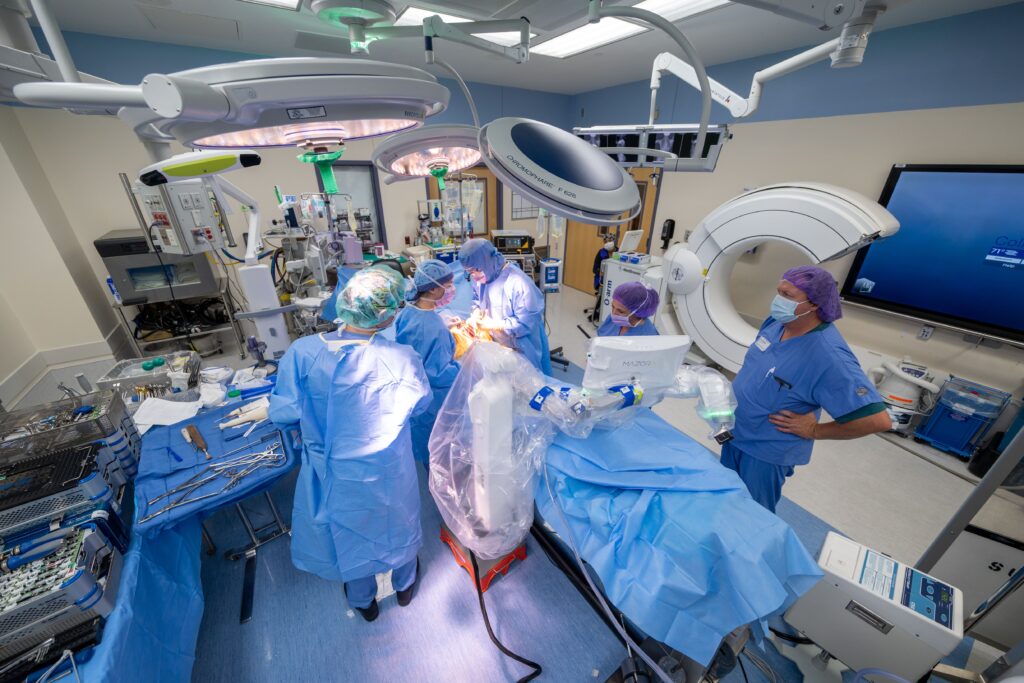
Patients, how does ASPIRE impact you?
When you present to clinic for your preoperative appointment at one of the participating study institutions, you may be approached by research personnel to consent to be enrolled in ASPIRE. This means you will complete questionnaires before surgery and at your routine postoperative visits with your surgeon. Research personnel will collect data during your surgery on robotics coupled with navigation and/or patient-specific rods and will monitor your postoperative outcomes at the following time points:
| Visit 1 | Visit 2 | Visit 3 | Visit 4 | Visit 5 | Visit 6 | Visit 7 |
|---|---|---|---|---|---|---|
| Preoperative Clinic Visit | Surgery | Follow-Up Before Discharge | 6 Month Follow-Up | 1 Year Follow-Up | 2 Year Follow-Up | 5 Year Follow-Up |
Contact Information
If you would like to know more about ASPIRE, or have any questions or comments for the study group, please contact us at aspire_registry@childrens.harvard.edu.
*Please note: This email is intended for inquiries about the ASPIRE study group ONLY. If you have a medical emergency or questions regarding your treatment, please contact your surgeon directly.